
You’ve done the hard part. You found the car, checked it over, haggled, and handed over the money. Now it’s parked outside and the keys are in your pocket.
But a used car comes with a gap in its story. Even with a decent service book, you rarely know exactly what was done, when, and how well. The first few weeks of ownership are your chance to close that gap, fix the small things before they become big ones, and start your own clean record.
This checklist is split into three stages: day one, the first week and the first month. Paperwork rules differ from country to country, so treat the legal steps as a prompt to check your local requirements. The mechanical advice applies almost anywhere.
What to Do After Buying a Used Car: Day One, Week One and Month One
Day One: Paperwork, Insurance and the Bits That Came With the Car
Make Sure the Car Is Legally Yours
In most countries, buying a car and owning it on paper are two separate steps. Depending on where you live, you may need to transfer the title, update the registration document or notify the licensing authority, often within a set number of days.
Dealers usually handle this for you, but private sales often leave it to the buyer and seller. Either way, check that the transfer has actually been done. Until it is, fines, tolls or parking tickets could still end up in the wrong name.
Keep the bill of sale or receipt somewhere safe. It’s your proof of the price, date and the seller’s details if anything goes wrong later.
Get Insured Before You Drive
In most places it’s illegal to drive without insurance, and the seller’s policy almost never transfers to you. Arrange cover before you drive the car home, not the next morning. Have the registration number or VIN (vehicle identification number) ready, as insurers will ask for it.
Collect Everything That Should Come With the Car
It’s easy to forget these in the excitement of the handover. Check that you have:
- All the keys. A replacement smart key can be surprisingly expensive, so find out now if there’s only one.
- The service book and receipts. These are the best evidence of what maintenance has already been done.
- The owner’s manual. If it’s missing, most manufacturers publish manuals online.
- The locking wheel nut key, if the car has locking nuts. Without it, changing a wheel becomes a garage job.
- The spare wheel or repair kit, jack and tools.
- Any warranty paperwork, including what it covers and how to make a claim.
Week One: Simple Checks You Can Do Yourself
None of these need tools or mechanical skill. Together they take less than an hour, and they tell you a lot about the car you’ve just bought.
Check for Open Safety Recalls
Recalls are repaired free of charge, but only if someone books the car in. Previous owners don’t always bother. In the US, you can search by VIN on the NHTSA recall lookup. In the UK, the government’s vehicle recall checker works with the registration number. Elsewhere, your local dealer for that brand can check the VIN for you.
Look Closely at the Tyres
Tyres are the only part of the car touching the road, and they’re one of the most common things sellers skimp on. Check four things:
- Tread depth. Look for the small wear bars in the grooves. If the tread is level with them, the tyre needs replacing.
- Pressure. Use the figures on the sticker inside the driver’s door or in the manual, not the maximum printed on the tyre.
- Age. The last four digits of the code on the sidewall show the week and year the tyre was made. “2319” means the 23rd week of 2019. Old rubber hardens and cracks even with plenty of tread left.
- Uneven wear. More wear on one edge than the other often points to an alignment problem.
Don’t forget the spare. The US road safety agency has a clear guide to tyre tread, pressure and ageing if you want more detail.
Check the Fluid Levels
With the car parked on level ground and the engine cold, check:
- Engine oil on the dipstick, or through the dashboard menu on cars without one. Very dark, gritty or low oil is a hint that servicing has been neglected.
- Coolant in the expansion tank. Never open the cap while the engine is hot.
- Brake fluid in its reservoir. It should sit between the min and max marks.
- Screen wash. Not critical, but you’ll miss it on the first dirty road.
Note the levels down. If one keeps dropping over the following weeks, that’s useful information to give a mechanic.
Test Everything Electrical
Walk around the car with someone else and check every light: headlights on dipped and main beam, indicators, brake lights, reversing lights and fog lights. Then try the wipers, horn, windows, mirrors, air conditioning, heated seats and anything else with a button. Faults are cheaper to fix early, and if you bought from a dealer recently, you may still be covered.
Get to Know the Dashboard
When you start the car, most warning lights should come on briefly and then go out. If any stay lit, find out why before you take a long trip. Every car is slightly different, so spend ten minutes with the manual learning what yours is trying to tell you.
Month One: Book a Baseline Service
A baseline service is a simple idea: unless you have clear proof that a job was done recently, assume it’s due. It costs a little upfront, but it resets the maintenance clock so you know exactly where you stand from now on.
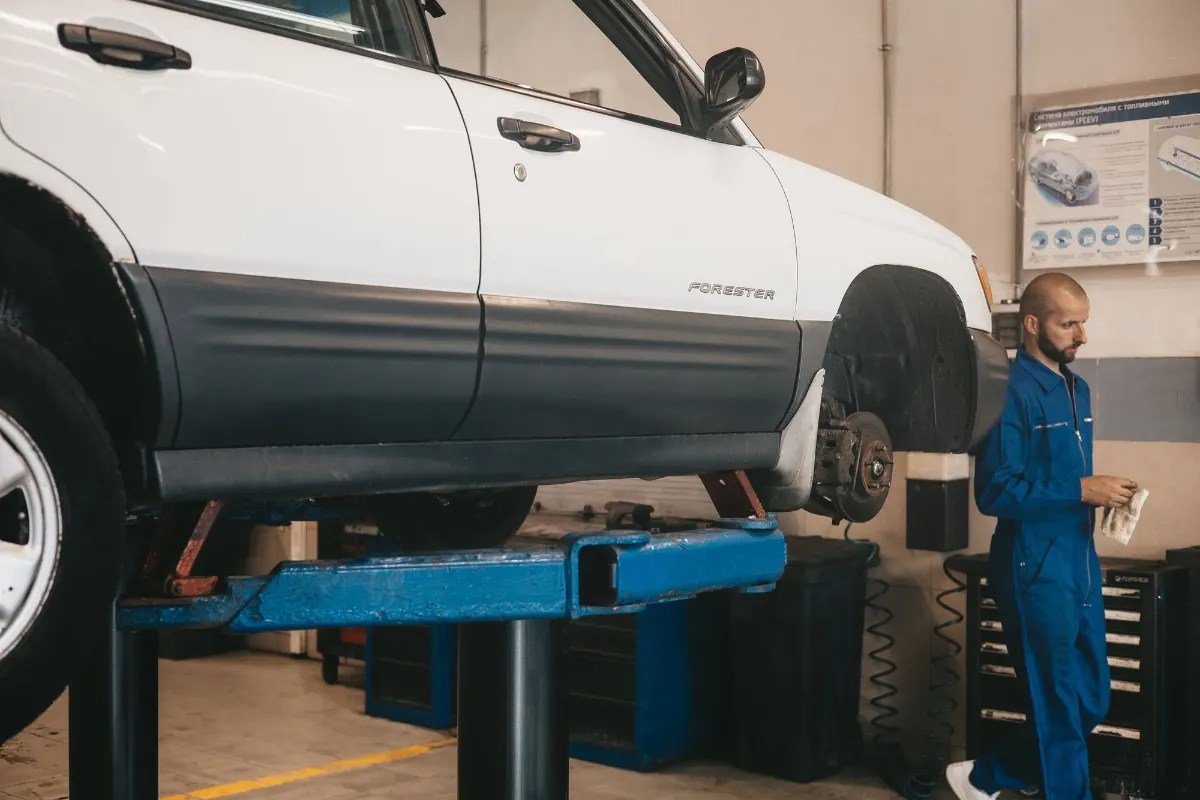
Take the service book and receipts with you, and ask the mechanic to compare them against the manufacturer’s schedule. Here’s what a good baseline service usually covers.
Oil, Filters and Fluids
- Engine oil and oil filter. The cheapest insurance there is. Use the grade listed in the manual.
- Air filter and cabin filter. Both are inexpensive, and a fresh cabin filter often cures a musty smell from the vents.
- Brake fluid. It absorbs moisture over time, which reduces braking performance. Many manufacturers ask for a change every two to three years, so if there’s no record, it’s worth doing.
- Coolant. Ask the mechanic to test its condition rather than simply topping it up.
- Spark plugs on petrol cars, if they’re close to or past their interval.
The Timing Belt: The One You Can’t Afford to Guess
If you only take one thing from this article, make it this. Many engines use a rubber timing belt that has to be replaced at a set mileage or age. On a lot of engines, a snapped belt lets the pistons hit the valves, and the repair can cost more than the car is worth.
Find out whether your engine has a belt or a chain. Chains are designed to last much longer and don’t usually have a fixed replacement interval. If it’s a belt and there’s no receipt showing it was changed on time, have it done. It’s often sensible to replace the water pump at the same time, as it sits behind the belt on many engines.
Brakes, Battery and Underneath the Car
With the car on a lift, a mechanic can measure the brake pads and discs, check the battery’s health with a tester, and look for oil leaks, worn suspension bushes, split CV boots and rust. These are hard to spot on a test drive, and they’re exactly the things a seller is unlikely to mention.
A Word on Gearbox Fluid
Automatic gearbox fluid is worth asking about, but it’s not always a simple yes. On some high-mileage gearboxes where the fluid has never been changed, mechanics disagree about whether a sudden full change is wise. Ask a specialist who knows your model rather than going with a quick-fit centre’s standard package.
What to Do Now and What Can Wait
If the budget is tight after buying the car, prioritise like this:
| Priority | Jobs |
|---|---|
| Before you drive | Insurance, ownership transfer, any warning light that stays on |
| Within a week | Recall check, tyre condition and pressures, fluid levels, lights |
| Within a month | Oil and filter, brake fluid, timing belt if there’s no record, brake inspection |
| Can wait | Cosmetic repairs, detailing, upgrades and accessories |
Start Your Own Service Record
From the day you buy the car, keep every receipt and write down the date and mileage of each job. A simple note on your phone or a folder in the glovebox is enough. It makes future maintenance easier to plan, and it adds real value when it’s your turn to sell.
Check the manual for your service schedule too. Many list a “severe” schedule for cars used for short trips, in heavy traffic, in dusty conditions or in extreme heat. Plenty of everyday driving falls into that category.
Bought an Imported Car? A Few Extra Steps
If your car was imported, for example a used model from Japan, add these to your list:
- Keep the auction sheet and export paperwork with the car’s documents. They’re part of its history.
- Find an English-language manual, or one in your own language. The original may not be.
- Check the radio and navigation. Japanese FM radio uses a lower frequency range than most countries, so original head units often can’t tune local stations without an adapter or replacement.
- Ask a local specialist about parts. Some home-market models use parts that aren’t stocked locally, and it’s better to know before something breaks.
Frequently Asked Questions
Should I change the oil right after buying a used car?
Unless you have a receipt showing it was changed very recently, yes. It’s cheap, it gives you a known starting point, and it removes any doubt about the quality or grade of oil the previous owner used.
How soon should I service a used car after buying it?
Within the first month is a good target. Sooner is better if there’s no service history, the oil looks dirty, or the car is close to a major interval such as a timing belt change.
What should I replace after buying a used car?
Replace anything that’s due or has no record: usually the engine oil and filter, air and cabin filters, and brake fluid. A timing belt with no proof of replacement should also be a priority. Don’t replace parts just for the sake of it if the paperwork shows they were done recently.
How can I tell if the timing belt has been changed?
Look for a receipt or a service book entry that mentions it. Some mechanics also leave a sticker in the engine bay with the date and mileage. If there’s no evidence, assume it hasn’t been done.
Can I return a used car if I find a problem after buying it?
It depends on where you live and who you bought from. Dealers are usually bound by consumer protection laws, while private sales often have far fewer protections. Check your receipt, any warranty and your local consumer rights rules, and contact the seller quickly if something is wrong.
More Guides From The Motor Vision
- If a light stays on after you start the car, our guide to dashboard warning lights and what they mean explains which ones need urgent attention.
- Still shopping, or buying another car soon? Read our essential checks to avoid used car scams before you hand over any money.
- Importing a car? Follow our step-by-step guide to importing a car from Japan, and learn how to read the condition report with car auction grades explained.
Conclusion
Buying a used car doesn’t end when you pay. Sort the paperwork and insurance on day one, spend an hour on simple checks in the first week, and book a baseline service within the first month.
It’s a small amount of time and money compared with what you’ve just spent. In return, you get a car you understand, a clear maintenance record, and far fewer surprises on the road ahead.